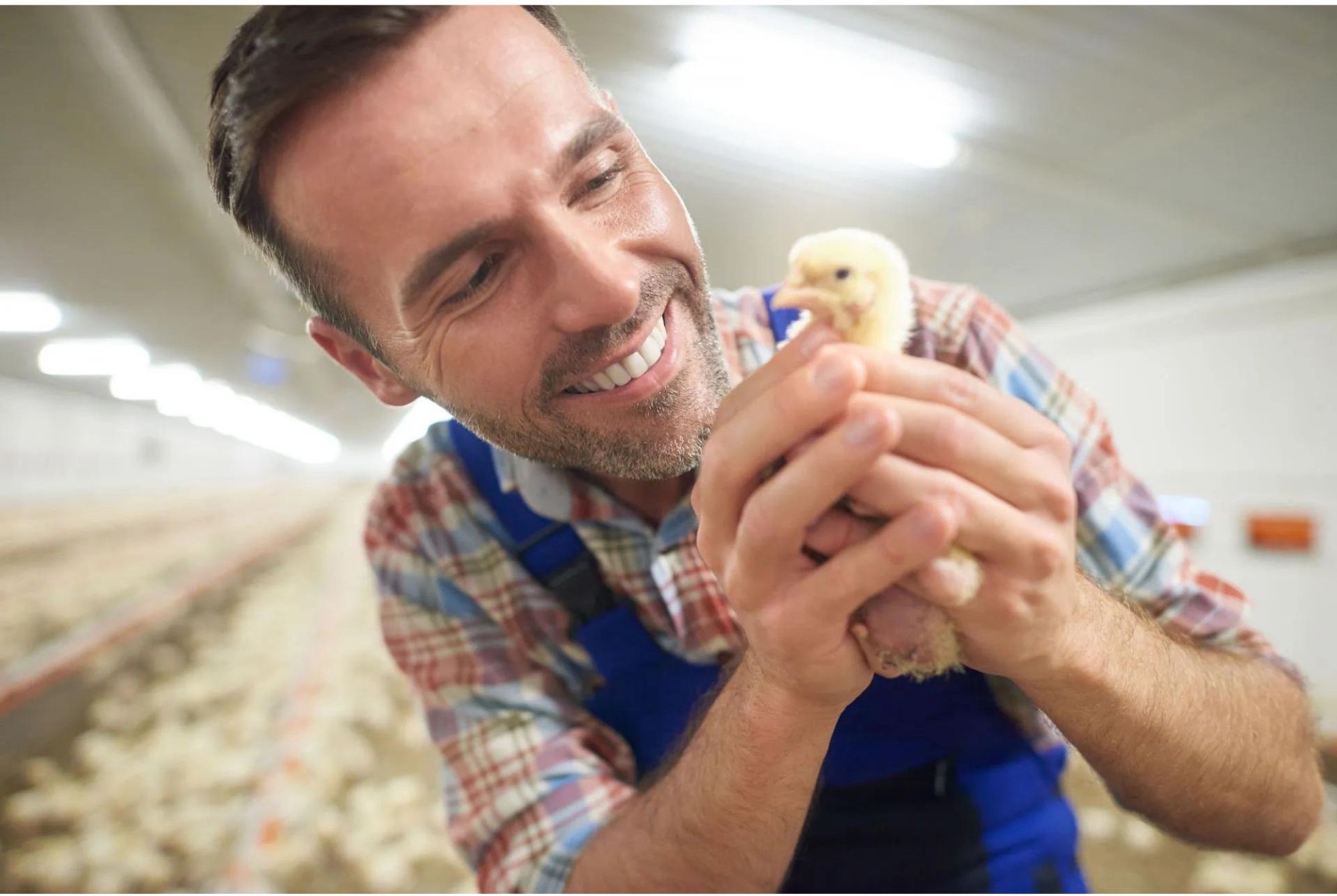
Heating a poultry house is one of the fundamental elements in creating a favorable microclimate that allows for maintaining good conditions for poultry farming and thus achieving satisfactory economic returns. In intensive poultry farming, it is important to maintain the highest possible productivity of the animals. Only healthy animals with optimal living conditions are productive. To meet their needs, modern heating and ventilation systems are required, forming an efficiently functioning system. Various heating systems are available on the market that ensure a constant temperature in the poultry house. Which one should you choose?
Why a gas tank?
A liquid gas tank is an energy source that is always available, safe, and environmentally friendly. Therefore, it is suitable not only for businesses in animal production but also for drying facilities for tobacco, herbs, fruits, or vegetables. The large size of poultry houses and the high temperatures required for poultry rearing demand equipment capable of providing a large amount of heat in a short period of time (at relatively low cost).
Liquefied petroleum gas (LPG) heating offers particular advantages in this regard. LPG provides tailored solutions for every purpose: air heating, heating individual sections of various sizes, preparing livestock buildings before the arrival of animals, etc. LPG appliances are robust and reliable and can be expanded at any time with additional tanks, connections to the pipeline network, and connections to other equipment. A gas tank or tank battery located near livestock facilities provides a large amount of energy with a small amount of storage.
Which tank should you choose?
An above-ground gas tank with a capacity of, for example, 6,400 liters is ideal for a poultry house. These types of tanks are recommended for large buildings with an area exceeding 300 m², as well as for industrial facilities. Groups of several such tanks successfully supply gas to drying rooms, poultry houses, warehouses, or other industrial facilities using propane.
Poultry farming is the most demanding type of livestock production in agriculture. A characteristic feature of poultry farming is that birds are highly sensitive to changes in temperature and the associated humidity. A suitable heating system is therefore one of the most critical elements on a poultry farm. A power outage can be a major problem in this environment. Temperature fluctuations of just a few degrees can impair the effectiveness of poultry fattening and even lead to disease and the death of a significant number of birds. Solutions based on burning coal or wood fail due to the difficulty of regulating the temperature of the heating medium. A coal or wood-fired boiler cannot be suddenly extinguished or reignited very quickly. Gas infrared heaters and radiant heaters work much better in terms of easily regulating the room temperature. In the case of gas heaters, it is possible to connect the farm to the existing gas network, or if no gas network exists, to use a liquid gas tank.
No harmful substances are released into the air during gas combustion, and the farm has access to a highly efficient heat source. By using gas radiators or liquid gas heaters, you can save up to 30% on poultry house heating costs compared to electric or fuel oil heaters.